Our Approach
How It Works
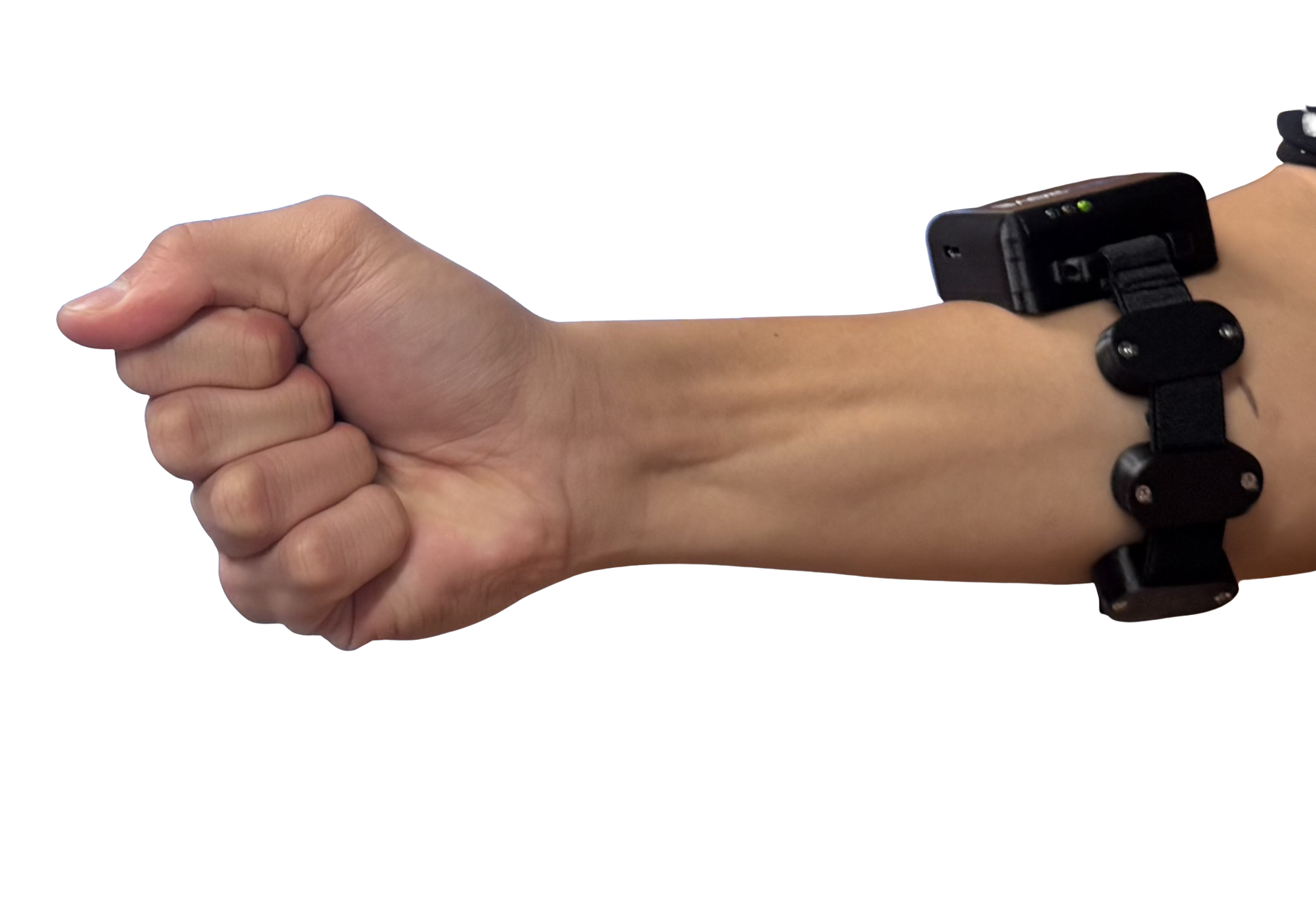
1. User Muscle Contraction
The process begins when the user contracts their right arm. These voluntary muscle contractions generate electrical signals that serve as the input for the entire EMBRACE system.
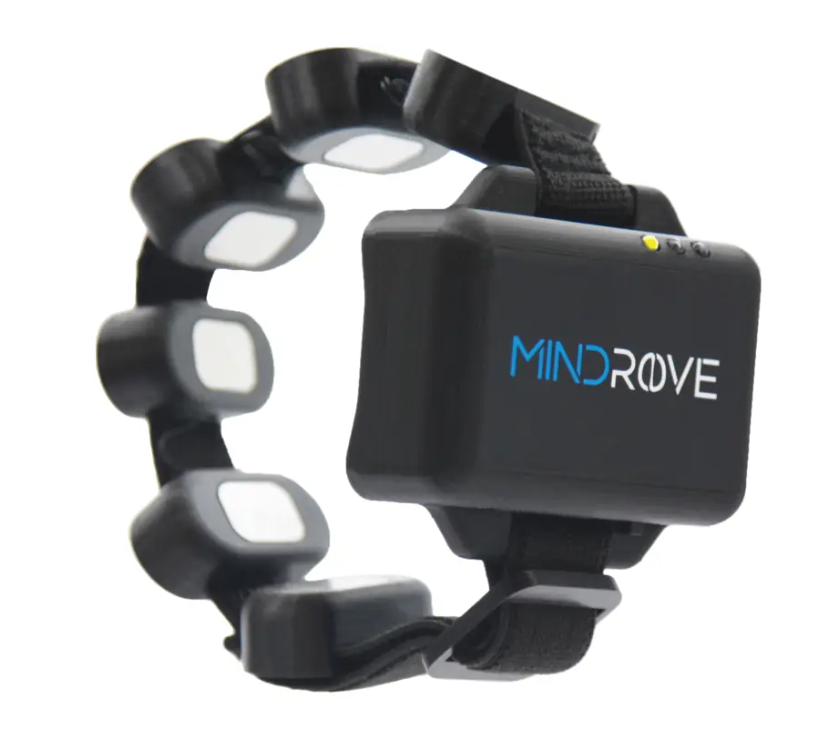
2. Mindrove EMG Armband
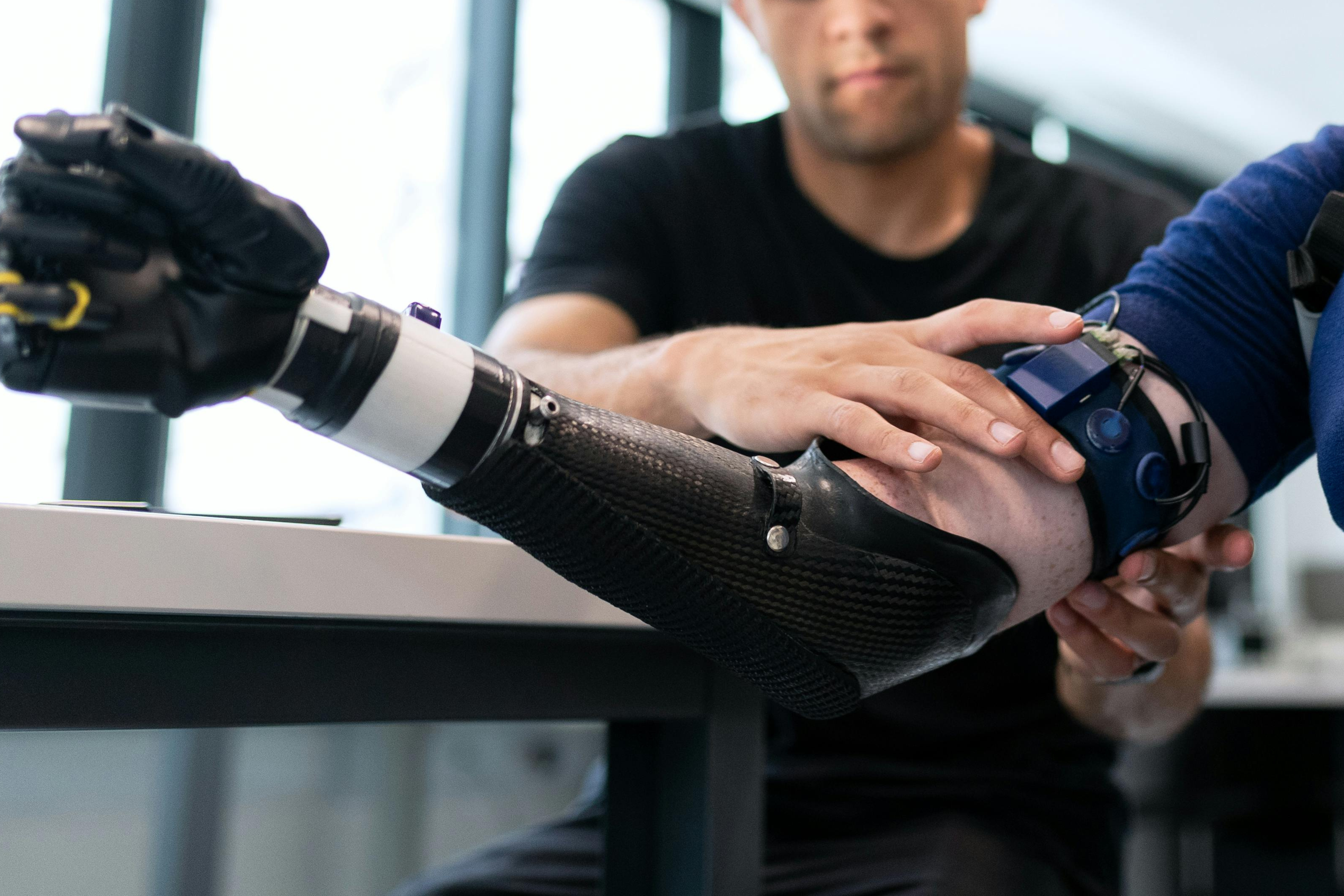
The Mindrove EMG armband is worn on user's right forearm and detects muscle activity non-invasively through surface electrodes. It wirelessly transmits raw EMG data to the system for processing.
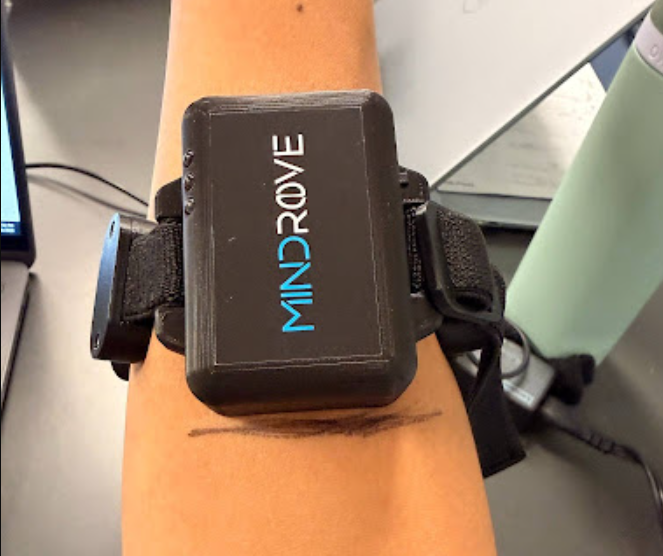
3. EMG Signal Acquisition
Muscle activity is collected through the Mindrove EMG armband, allowing the system to detect user intent non-invasively. The armband captures surface electromyography signals directly from the skin, a non-invasive method.
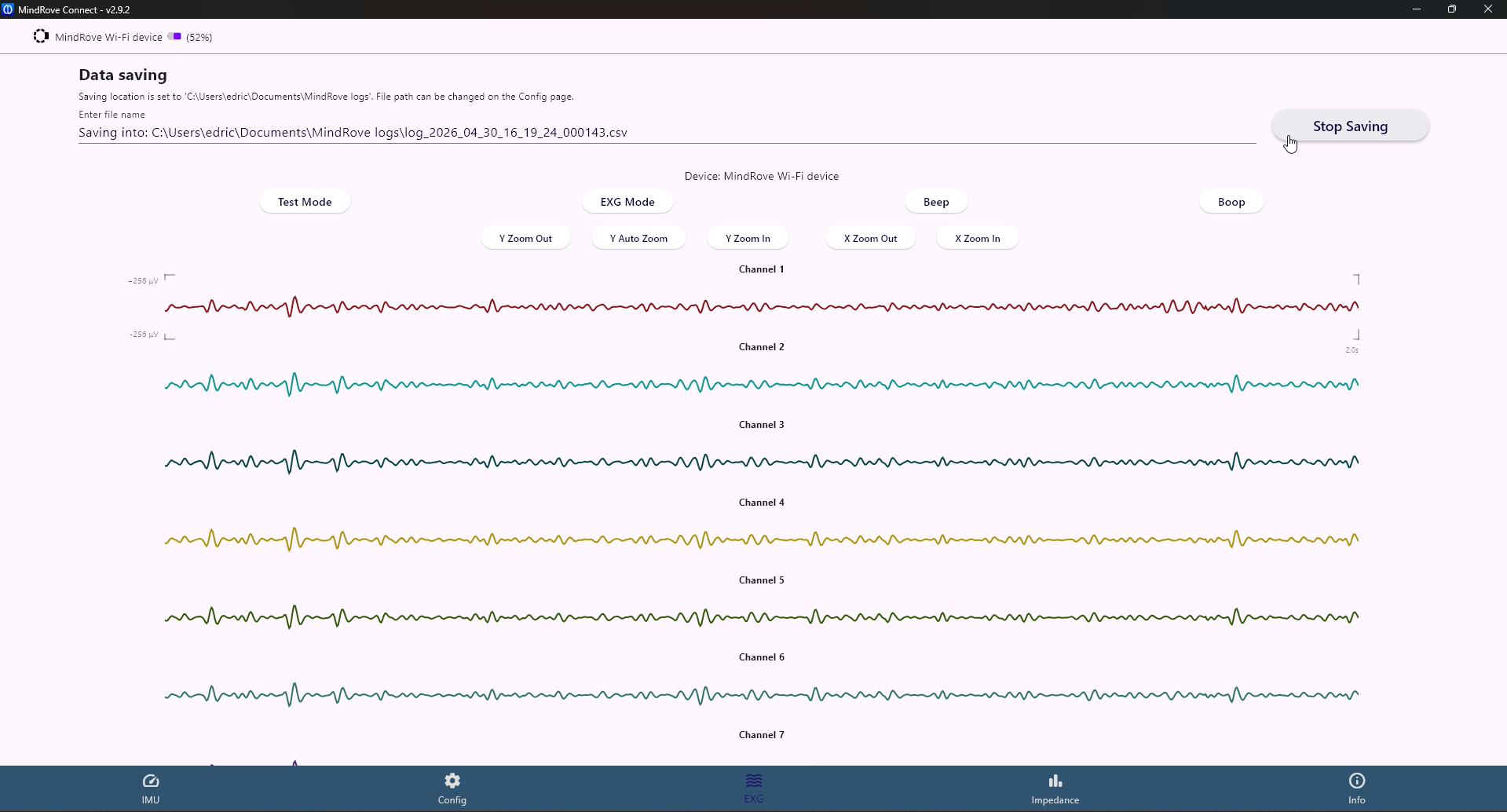
4. Signal Processing & Feature Extraction
Raw EMG data is cleaned and processed to identify patterns related to different movements. Key features are extracted from the signal to prepare it for accurate machine learning classification.
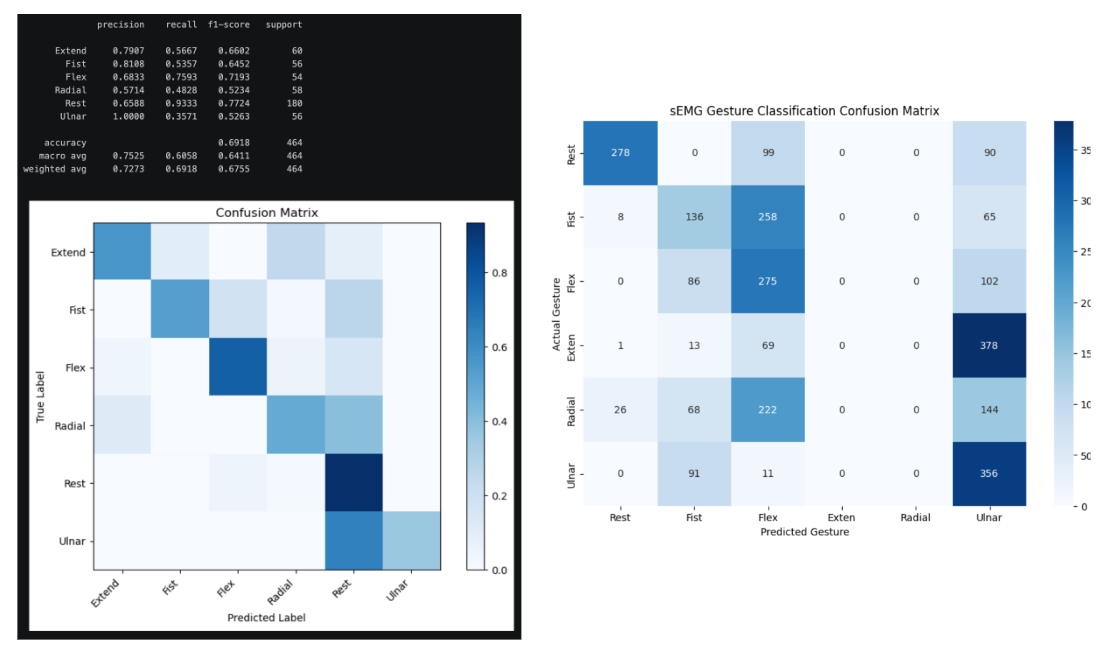
5. Machine Learning Classification
The processed features are classified into intended hand and wrist motions using a trained machine learning model. The system recognizes multiple gesture types in real time, enabling intuitive and responsive control.
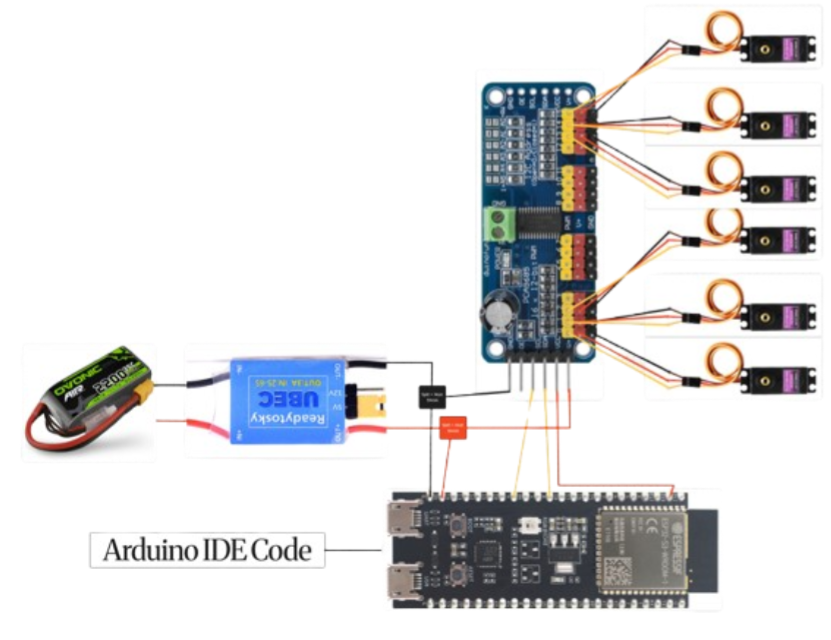
6. Microcontroller System
The classified gesture commands are sent via bluetooth to the ESP32 microcontroller, which interprets the signals and coordinates the actuation of the prosthetic hand's servo motors in real time.
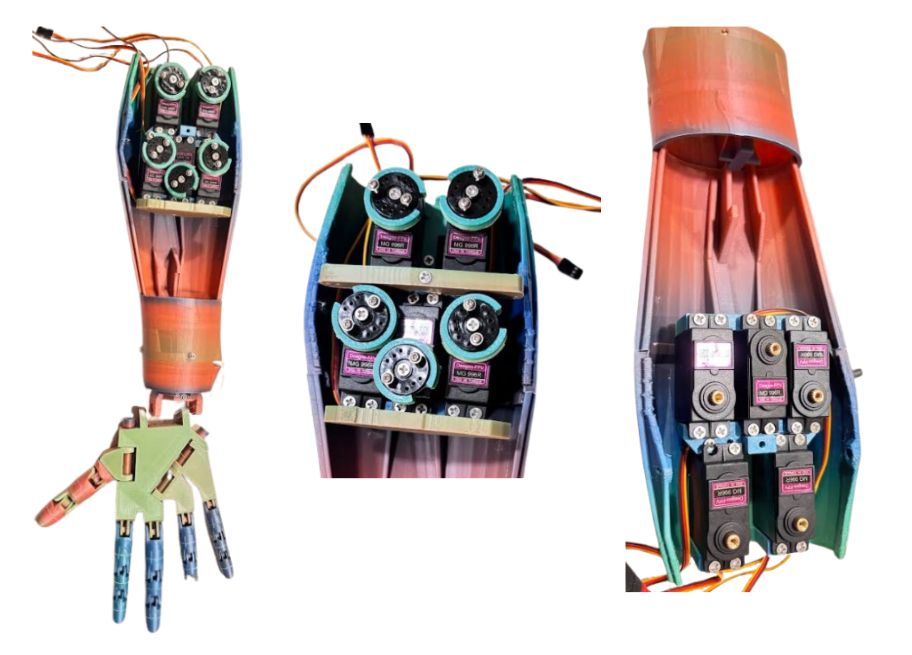
7. 3D-Printed Prosthetic Hand Motion
The ESP32 control system sends commands to actuate the 3D-printed prosthetic hand, translating classified gestures into precise physical movement across 6 degrees of freedom.
See EMBRACE in Action
Competitor Analysis
Main Competitors Feature Comparisons
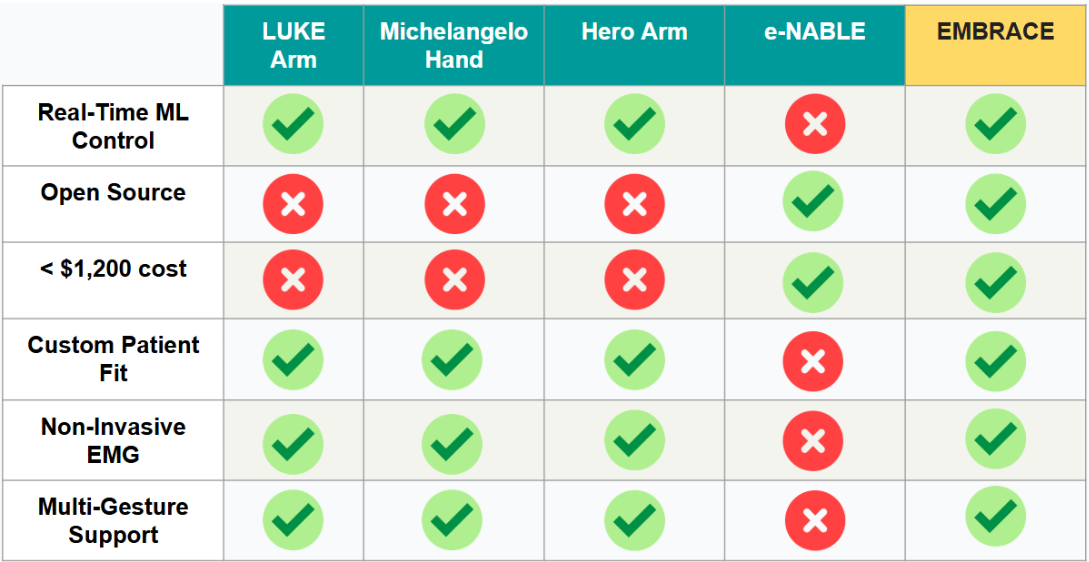
EMBRACE stands out among existing prosthetic solutions by uniquely combining the features that matter most
to patients and clinicians alike.
Unlike high-cost commercial options such as the LUKE Arm, Michelangelo Hand,
and Hero Arm, EMBRACE is fully open-source and designed to remain affordable and accessible. While the e-NABLE prosthetic shares EMBRACE's commitment
to low cost and open-source design, it lacks real-time machine learning control, non-invasive EMG sensing,
and multi-gesture support.
EMBRACE is the only solution in this comparison to satisfy all six criteria:
real-time ML control, open-source availability, under $1,200 cost, custom patient fit, non-invasive EMG,
and multi-gesture support, making it a comprehensive, patient-centered prosthetic platform built for
both performance and accessibility.
Market Strategy
EMBRACE is designed not just as a capstone project, but as a scalable solution with a clear path to real-world deployment. Our go-to-market strategy focuses on accessibility, clinical validation, and open-source distribution to reach the patients who need it most.
🎯 Target Market
Our primary users are individuals with transradial (below-elbow) limb loss who are seeking an affordable and intuitive prosthetic alternative. Our secondary market includes prosthetic clinics and rehabilitation centers looking for advanced, cost-effective devices for their patients.

🏥 Clinical Validation
Before broad deployment, EMBRACE will undergo clinical testing through partnerships with rehabilitation centers and prosthetic clinics. Validating real-world usability and performance is a critical step toward regulatory approval and building trust with healthcare providers.

🌐 Open Source Distribution
EMBRACE's hardware designs, software, and machine learning models will be open-sourced to allow clinics, researchers, and developers worldwide to adapt and improve the system. This approach accelerates adoption and ensures the technology reaches underserved communities globally.
- © EMBRACE
- Design Credit: HTML5 UP